Qd6 Qd65Nf Qled Specs, Features, and Value: Is it worth the price tag?
The landscape of modern television technology has shifted dramatically over the past few years, moving away from simple LED backlighting toward more sophisticated layers of color enhancement and contrast control. At the center of this evolution is Quantum Dot (QLED) technology, a refinement that has brought high-end color performance to a wider range of price points. One of the most talked-about entries in this category is the Qd6 Qd65Nf Qled, a model that promises to strike a delicate balance between premium visual fidelity and accessible pricing. For consumers navigating a market filled with jargon like peak brightness, dimming zones, and refresh rates, understanding where the Qd65Nf fits into the ecosystem is essential before making a significant investment.
Television buyers today are more informed than ever, often prioritizing specific features like 4K upscaling, low input lag for gaming, and smart platform integration. The Qd6 Qd65Nf enters a crowded field where it must compete with established heavyweights and aggressive budget brands alike. This article provides an exhaustive analysis of the Qd6 Qd65Nf Qled, exploring its technical specifications, real-world performance, and overall value proposition to determine if it truly justifies its price tag for the average household.
Technical Specifications and Build Quality
At first glance, the Qd6 Qd65Nf Qled presents a sleek, modern aesthetic that aligns with contemporary home decor trends. The "bezel-less" design philosophy is heavily utilized here, with ultra-thin margins on the top and sides that maximize the screen-to-body ratio. This design choice is not merely cosmetic; it helps create a more immersive viewing experience, particularly in dark room environments where the edges of the frame seem to disappear into the shadows. The chassis is surprisingly slim for a QLED display, which often tends to be bulkier due to the additional layers required for Quantum Dot enhancement.
Under the hood, the Qd65Nf is powered by a proprietary processing engine designed to handle heavy loads of metadata for High Dynamic Range (HDR) content. The panel itself is a 65-inch 4K UHD display, utilizing a Vertical Alignment (VA) structure. VA panels are generally preferred for home theater setups because they offer superior native contrast ratios compared to In-Plane Switching (IPS) panels. This means the blacks appear deeper and less "milky," which is a critical factor for viewers who enjoy movies with high-contrast scenes, such as space thrillers or noir films.
Color Accuracy and Quantum Dot Layer
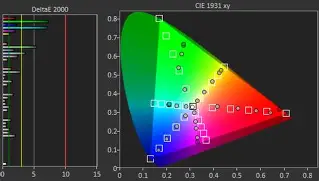
The defining feature of the Qd65Nf is the Quantum Dot layer. Unlike traditional LED-LCD TVs that use a yellow phosphor coating on blue LEDs to create white light, a QLED TV uses a film of tiny semiconductor particles. When hit with light, these nanocrystals emit incredibly precise wavelengths of color. In the Qd65Nf, this results in a significantly wider color gamut, covering a high percentage of the DCI-P3 color space used in digital cinema. This translates to more vibrant reds, deeper greens, and a level of saturation that standard LED monitors struggle to replicate without looking artificial.
Out of the box, the Qd65Nf leans toward a slightly cooler color temperature, which is common in retail settings to make the screen look "bright" and "crisp." However, for the enthusiast, the "Movie" or "Filmmaker" modes offer a much more accurate representation of the creator's intent. The skin tones are rendered with a natural warmth, and the gradients in a sunset or a complex sky are handled with minimal banding, thanks to the 10-bit (8-bit + FRC) color depth processing.
Performance in High Dynamic Range (HDR)
HDR is where the Qd6 Qd65Nf Qled truly aims to prove its worth. It supports the industry-standard HDR10 and HLG formats, and notably, it also includes support for dynamic metadata via HDR10+ or Dolby Vision (depending on the specific region’s firmware version). Dynamic metadata is crucial because it instructs the TV to adjust brightness and contrast levels on a frame-by-frame basis, rather than applying a single setting to the entire film. This ensures that a bright outdoor scene doesn't wash out the details, and a dark interior scene remains legible.
Peak brightness is a vital metric for HDR performance. While the Qd65Nf does not reach the blinding levels of flagship "Neo" or "Ultra" QLED models, it provides enough punch to make specular highlights—such as the glint of sun on water or the glow of a lightsaber—pop against darker backgrounds. The local dimming algorithm is relatively competent for its class. It manages to suppress "blooming" (where light leaks from a bright object into a dark area) effectively, although eagle-eyed viewers might notice some minor light bleed during extreme high-contrast scenarios, such as white rolling credits on a pitch-black background.
Shop the latest TVs & Home Theater picks on Amazon.
Browse Now →Smart TV Interface and Connectivity
The Qd6 Qd65Nf leverages a robust smart platform that focuses on speed and ease of navigation. The user interface is designed around a "Content First" philosophy, suggesting shows and movies based on viewing habits across various streaming services. This reduces the time spent "app hopping" and centers the experience on the remote. The remote itself is often a minimalist design, focusing on a directional pad and dedicated shortcut buttons for major streaming platforms.
Connectivity is another strong suit. The Qd65Nf typically features four HDMI ports, at least one of which supports eARC (Enhanced Audio Return Channel). This is essential for users who want to connect high-end soundbars or A/V receivers to enjoy uncompressed Atmos or DTS:X audio. For gamers, the inclusion of Auto Low Latency Mode (ALLM) is a welcome addition. When a gaming console is detected, the TV automatically switches to a mode that bypasses unnecessary image processing to reduce input lag, making the controls feel more responsive in fast-paced titles.
Comparison Table: Qd6 Qd65Nf vs. Competitors
| Feature | Qd6 Qd65Nf Qled | Standard 4K LED (Entry) | Premium Mini-LED QLED |
|---|---|---|---|
| Display Type | QLED (Quantum Dot) | Standard LED-LCD | Mini-LED QLED |
| Peak Brightness | Mid-Range (600-800 nits) | Low (250-400 nits) | High (1500+ nits) |
| Color Gamut | Wide (DCI-P3 ~90%) | Standard (sRGB) | Ultra-Wide (DCI-P3 ~97%) |
| HDR Formats | HDR10, HLG, Dolby Vision | HDR10 only | All + Advanced Metadata |
| Gaming Features | ALLM, VRR (60Hz) | Basic Game Mode | ALLM, VRR (120Hz/144Hz) |
| Price Bracket | Mid-Market | Budget | Premium / Luxury |
Real-World Use Cases
To truly judge if a TV is worth the price, we must look at how it performs in different household environments. A television that looks great in a dark basement might struggle in a sun-drenched living room, and a TV perfect for casual news watching might fail to impress a cinephile.
1. The Bright Living Room
One of the greatest advantages of QLED technology over OLED is its ability to combat ambient light. The Qd6 Qd65Nf features an anti-reflective coating that, combined with the inherently high brightness of the Quantum Dot layer, makes it a strong performer for daytime viewing. Whether you are watching a sporting event or afternoon talk shows, the image remains vivid and does not get drowned out by window reflections. This makes it a highly practical choice for the average family room.
2. The Home Cinema Enthusiast
For those who prefer a dedicated "movie night" atmosphere with the lights turned off, the Qd65Nf holds its own, though it isn't without competition. The VA panel provides the necessary black levels for an immersive experience. However, since it is not a Mini-LED or OLED display, it does not have pixel-level control. Therefore, in very dark scenes, the blackest parts of the screen may appear slightly greyer than they would on a premium OLED. That said, for the price, the depth of image is significantly better than any entry-level LED TV.
3. The Modern Gamer
With the current generation of consoles pushing for higher frame rates and 4K resolution, the Qd65Nf is a solid "entry-to-mid" gaming display. While it may lack a 120Hz native refresh rate found in more expensive models, its 60Hz performance is exceptionally stable. The low input lag ensured by the "Game Mode" is excellent for RPGs, adventure games, and casual multiplayer. Competitive shooters might desire a higher refresh rate, but for the majority of gamers, the Qd65Nf provides a lush, colorful canvas that makes modern graphics shine.
Pros and Cons
- Pros: Excellent Color Volume - The Quantum Dot technology ensures that colors remain vibrant even at high brightness levels, which is a common failure point for cheaper TVs.
- Pros: Strong Brightness for Ambient Light - Performs admirably in rooms with significant sunlight, maintaining image clarity where other panels wash out.
- Pros: Sleek Aesthetic - The minimalist, bezel-less design makes the TV look more expensive than its actual retail price, fitting well in premium setups.
- Pros: Comprehensive HDR Support - Inclusion of multiple HDR formats ensures compatibility with almost all streaming content and Blu-rays.
- Cons: Viewing Angles - As with most VA panels, the image quality degrades slightly when viewed from a sharp angle, making it less ideal for very wide seating arrangements.
- Cons: Lacks 120Hz Refresh Rate - While fine for movies, enthusiast gamers might miss the ultra-smooth motion of a 120Hz panel.
- Cons: Speaker Quality - While clear for dialogue, the built-in speakers lack deep bass, which is standard for slim televisions; a soundbar is recommended.
Buying Guide: Is the Qd6 Qd65Nf Right for You?
Choosing a new television requires a balance of budget, space, and intended use. The Qd6 Qd65Nf Qled occupies a "sweet spot" in the market, but it is not a universal solution for every buyer. Use the following considerations to decide if this model should be on your shortlist.
Discover deals on TVs & Home Theater — updated daily.
Browse Now →Consider Your Room Size and Seating
The 65-inch screen size is currently the most popular choice for North American and European living rooms. It offers a cinematic feel without requiring a massive dedicated space. For an optimal 4K experience, a viewing distance of about 5 to 9 feet is recommended. If your room is very wide and people will be watching from the far sides of the couch, be mindful of the VA panel's viewing angle limitations. If everyone sits mostly centered, the contrast benefits of the VA panel far outweigh the viewing angle drawbacks.
Evaluate Your Content Preferences
If you primarily stream content from services like Netflix, Disney+, and Amazon Prime, the Qd65Nf is an ideal companion. These services are increasingly offering content in 4K Dolby Vision or HDR10+, formats that this TV handles with grace. However, if you are still primarily watching standard-definition cable or DVD-quality content, ensure that you appreciate the TV's upscaling capabilities. The onboard processor does a commendable job of sharpening lower-resolution signals, making older content look refreshed on the dense 4K pixel grid.
Budget vs. Future-Proofing
The price tag of the Qd65Nf usually places it squarely in the middle of the market. You are paying a premium over basic LED TVs to get the "Quantum" color experience, but you are saving significantly by not opting for OLED or Mini-LED. This is a "value-forward" purchase. It is future-proof in terms of resolution (4K is here to stay) and HDR standards, but it is not "bleeding edge." If you plan to keep your TV for 5 to 7 years, the Qd65Nf offers a feature set that will remain relevant and enjoyable for the duration of its lifespan.
The Importance of Audio
Prospective buyers should always budget for an external audio solution when purchasing a slim QLED TV. Manufacturers spend the majority of the production budget on the panel and processing. The internal speakers are usually downward-firing and lack the physical space needed to move enough air for impactful low-end frequencies. Adding a simple 2.1 soundbar with a dedicated subwoofer will elevate the experience of the Qd65Nf to match its impressive visual output.
Conclusion
The Qd6 Qd65Nf Qled stands as a testament to how far mid-range television technology has progressed. It successfully bridges the gap between the utilitarian performance of budget sets and the high-luxury experience of flagship displays. By focusing on what users care about most—vibrant color, meaningful contrast, and a smart, responsive interface—it delivers a package that feels cohesive and well-engineered.
While power users might find the lack of a 120Hz refresh rate or the slight limitations in viewing angles to be a deterrent, these are minor concessions when viewed through the lens of cost-to-performance ratio. For the vast majority of consumers who want a "big, bright, and beautiful" screen for movies, sports, and casual gaming, the Qd65Nf represents a smart investment. It doesn't just offer 4K resolution; it offers a quality of 4K that respects the nuances of color and light. If you are looking for a television that provides a premium look and feel without a four-figure price tag, the Qd6 Qd65Nf Qled is undeniably worth its place in your home theater.