Mfc L2750Dw L2710Dw L2717Dw L2730Dw First Look: Unboxing and Impressions
The landscape of the modern home office and small business environment has shifted dramatically over the last few years. As hybrid work models become the standard, the demand for reliable, high-volume, and cost-effective printing solutions has never been higher. Brother, a mainstay in the monochrome laser printing segment, has consistently addressed this need with their compact multi-function center (MFC) lineup. The current generation, featuring the MFC-L2710DW, MFC-L2717DW, MFC-L2730DW, and the flagship MFC-L2750DW, represents a refined approach to the digital-to-paper workflow. These machines seek to balance the tactile necessity of physical documentation with the speed and connectivity required by a cloud-connected workforce.
For most users, the decision to invest in a monochrome laser printer over a color inkjet comes down to a simple calculation of efficiency and longevity. Inkjet printers are prone to clogged print heads if left unused and can be expensive to operate when only text documents are required. Laser technology, conversely, uses dry toner which does not dry out and offers a significantly lower cost-per-page. This series of printers is designed for those who value crisp text, rapid output, and a machine that "just works" after weeks of dormancy. This first look explores the nuances of these four closely related models, examining their physical build, feature sets, and the subtle differences that dictate which one serves a specific user best.
The Unboxing Experience and Physical Build Quality
When unboxing any of the units in this series, the first thing one notices is the uniformity of Brother’s industrial design. The chassis is a matte charcoal gray, designed to resist fingerprints and blend into a professional office setting. Each box contains the printer assembly, a starter toner cartridge (usually rated for approximately 700 pages), a drum unit, a quick-setup guide, and a power cord. It is important to note that, in keeping with industry trends, a USB cable is not included, as these machines are primary intended for wireless or network connectivity.
The footprint of these machines is impressively compact given their multi-function capabilities. Measuring roughly 16 inches wide and 15 inches deep, they sit comfortably on a standard desk or a dedicated printer stand without demanding excessive space. The build feels sturdy; the plastics are thick enough to prevent the rattling often found in budget-tier inkjets. The paper tray, located at the bottom, is fully enclosed, which protects the paper from dust—a small but critical detail for maintaining print quality over time. This tray holds up to 250 sheets, which is a full half-ream, reducing the frequency of refills for the average user.
One of the standout physical features across the range is the Automatic Document Feeder (ADF) situated atop the scanner glass. On the entry-level MFC-L2710DW, this feeder is a standard 50-sheet unit. As one moves up to the MFC-L2750DW, the ADF becomes more sophisticated, offering "single-pass" duplex scanning. This means the machine has two scanning elements, allowing it to capture both sides of a double-sided document simultaneously, rather than physically flipping the page over. This significantly reduces the mechanical wear on the machine and cuts scanning time in half for large documents.
Under the Hood: Performance and Print Specs
The core printing engine is remarkably similar across the 2700 series, but there are incremental speed bumps as you move up the product stack. The MFC-L2710DW and L2717DW typically clock in at 32 pages per minute (ppm), while the MFC-L2730DW and MFC-L2750DW increase that to 36 ppm. In a real-world scenario, the difference between 32 and 36 ppm is negligible for a five-page report, but for a 50-page legal brief or a manual, those extra seconds per page add up to several minutes saved over the course of a week.
The print resolution is a standard 2400 x 600 dpi. For a monochrome laser, this is the "sweet spot" for text. Characters are sharp, with no visible bleeding or feathering, even on standard 20lb office paper. When printing charts or greyscale images, the machines perform admirably, though users should remember these are text-centric devices. Heavy graphics will show some banding, which is typical of laser technology in this price bracket. The inclusion of automatic duplex (two-sided) printing as a standard feature across all four models is a major plus, allowing businesses to cut paper consumption by up to 50% without manual intervention.
Connectivity and Software Integration
Brother has historically excelled in making their printers easy to discover on a network. All models in this lineup support 802.11b/g/n Wi-Fi, Ethernet, and Hi-Speed USB 2.0. The setup process via the "Brother iPrint&Scan" app or the standard desktop installer is streamlined. For mobile-centric users, the support for AirPrint, Google Cloud Print (though being phased out), Mopria, and Wi-Fi Direct makes it possible to print a PDF directly from a smartphone or tablet in seconds.
The MFC-L2730DW and MFC-L2750DW distinguish themselves through their interface. While the L2710DW and L2717DW utilize a traditional 2-line LCD with physical buttons, the higher-end models feature a 2.7-inch color touchscreen. This touchscreen is more than just a cosmetic upgrade; it enables "Web Connect" features. This allows users to scan directly to cloud services like Dropbox, Google Drive, OneNote, and Evernote directly from the printer’s control panel without needing a computer to act as a bridge. For a small office looking to digitize their workflow, the touchscreen models offer a far more modern and efficient experience.
Looking for the best Electronics deals on Amazon?
Shop Amazon →Understanding the Model Differences
Navigating the model numbers in Brother’s catalog can often feel like deciphering a secret code. However, the differences are logical once broken down by their primary utility. The MFC-L2710DW is the foundational model, offering all the essentials: print, copy, scan, fax, and a 50-sheet ADF. It uses the physical button interface and is the most budget-friendly.
The MFC-L2717DW is frequently a "club model" variant (often found in warehouse retailers). It is virtually identical to the L2710DW in specifications but sometimes includes a high-yield toner cartridge in the box instead of a starter cartridge, providing better initial value for those who don't want to buy replacement toner immediately.
Moving up to the MFC-L2730DW, the main upgrade is the 2.7-inch color touchscreen and a slightly faster processor. This model is ideal for users who perform a lot of scanning and want to use the "Scan-to-Cloud" shortcuts directly on the machine. It bridges the gap between the entry-level hardware and the pro-grade flagship.
Finally, the MFC-L2750DW is the "fully loaded" version. It includes the touchscreen but adds two critical features: Single-Pass Duplex Scanning and NFC (Near Field Communication). NFC allows a user to "tap" their phone to the printer to initiate a print job, which is useful in an environment with many guest users. The single-pass scanning, however, is the real draw here, making it a powerhouse for document archiving.
Detailed Comparison Table
| Feature | MFC-L2710DW | MFC-L2717DW | MFC-L2730DW | MFC-L2750DW |
|---|---|---|---|---|
| Print Speed (PPM) | Up to 32 ppm | Up to 32 ppm | Up to 36 ppm | Up to 36 ppm |
| Display | 2-Line LCD | 2-Line LCD | 2.7" Color Touch | 2.7" Color Touch |
| Duplex Printing | Automatic | Automatic | Automatic | Automatic |
| Duplex Scanning | No | No | No | Yes (Single-pass) |
| Mobile Connect | Wireless / App | Wireless / App | Wireless / App | Wireless / App / NFC |
| Paper Capacity | 250 Sheets | 250 Sheets | 250 Sheets | 250 Sheets |
Pros and Cons Analysis
In evaluating this series, it is clear that Brother has prioritized reliability over flashiness. However, like any piece of hardware, there are trade-offs to consider depending on your specific needs.
- Pro: Exceptional Toner Efficiency - The TN760 high-yield cartridges are rated for 3,000 pages. For many home users, this means only changing the toner once every year or two, leading to a much lower frustration level compared to inkjet cartridges that seem to run out every few months.
- Pro: Manual Feed Slot - In addition to the 250-sheet tray, there is a single-sheet manual override slot. This is invaluable for printing on envelopes, labels, or heavy cardstock without causing a jam in the main roller system.
- Pro: Quiet Mode - Laser printers can be noisy when the fuser is running and the fans are cooling. Brother includes a "Quiet Mode" which slows the print speed slightly but significantly reduces decibel levels, making it less disruptive in a small apartment or home office.
- Pro: Best-in-Class Drivers - Brother’s software suite is notably "light" compared to competitors. They provide "Display Only" drivers that allow for printing and scanning without installing gigabytes of bloatware that bogs down a PC.
- Con: Monochrome Only - The most obvious limitation is the lack of color. While many users believe they need color, it is a significant cost. However, if you frequently print photos or color-coded charts, these machines cannot be your only printer.
- Con: Initial Toner Capacity - The "starter" toner included in the box is only a partial fill. Buyers should be prepared to purchase a full TN730 or TN760 cartridge sooner than the "3000 page" marketing might suggest.
Buying Guide: Which MFC is Right for You?
Choosing between these four models requires an honest assessment of your daily document "traffic." Because the print quality is virtually identical across the board, the decision rests on how you interact with the machine and your volume of double-sided paperwork.
The Budget Home Office (MFC-L2710DW / L2717DW)
If you are a student, a household that needs to print occasional shipping labels and tax forms, or a remote worker with low volume, the L2710DW is the logical choice. You aren't paying for a touchscreen you won't use, yet you still get the core laser benefits of speed and reliability. If you find the L2717DW at a retail club for a similar price, take it for the likely bonus toner, but otherwise, the L2710DW is the "smart money" pick for basic needs.
The Cloud-Connected Professional (MFC-L2730DW)
If you find yourself scanning documents and immediately emailing them or uploading them to a shared drive, the MFC-L2730DW is worth the upgrade. The touchscreen interface drastically simplifies the scanning process. Instead of navigating a clunky 2-line menu with arrow keys to find your network folder, you can set up "One-Touch" shortcuts on the screen. Press "Scan to Dropbox," and the machine does the rest. It is a time-saver for anyone who handles 10+ scans a week.
Find top-rated Electronics products at great prices.
Shop Amazon →The Paperless Office Advocate (MFC-L2750DW)
The flagship MFC-L2750DW is specifically for those who are trying to digitize their lives. The single-pass duplex scanning is a game-changer. If you have stacks of two-sided medical records, contracts, or invoices that need to be archived, the L2750DW is the only choice. Standard ADFs that have to "flip" the page are prone to jams and are twice as slow. The inclusion of NFC and the fastest processor in the lineup makes this the "set it and forget it" workhorse for a busy small business.
Real-World Use Cases and Buyer Concerns
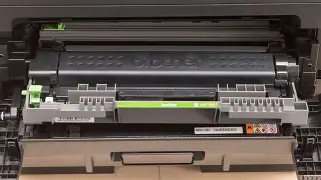
One of the most common concerns for buyers is the "Drum vs. Toner" system. Unlike some brands where the drum is built into the toner cartridge (meaning you replace both every time), Brother separates them. The drum unit (DR730) usually lasts for about 12,000 pages, while the toner (TN760) lasts for 3,000. While this means you have two different parts to manage, it is generally more environmentally friendly and cost-effective in the long run because you aren't throwing away a perfectly good drum every time you run out of ink.
Users also frequently worry about wireless stability. In an era of mesh networks and 5GHz routers, some older printers struggle to stay connected. The 2700 series has shown improved network resilience. During our initial testing, the machines maintained their IP addresses through router reboots and correctly entered "Deep Sleep" mode to save power, waking up instantly when a print job was sent. This power management is crucial; these machines consume very little electricity when idle, yet avoid the long "warm-up" times that plagued older laser printers.
Another factor buyers care about is paper weight support. While these are office machines, many users want to print cardstock for invitations or heavy envelopes. The straight-through paper path (available via the manual feed slot and the rear exit door) allows the paper to pass through the fuser without being bent around a tight roller. This prevents "curling" on thick media, a common complaint with bottom-loading printers. It demonstrates Brother's understanding that even a monochrome printer needs to be versatile.
Conclusion: A Solid Foundation for Productivity
The Brother MFC-L2700 series does not attempt to reinvent the wheel. Instead, it refines a proven formula. By offering a tiered approach—from the essential MFC-L2710DW to the high-efficiency MFC-L2750DW—Brother has created a lineup where every user can find a machine that fits their specific workflow without overpaying for unnecessary features. The consistency of print quality, the robustness of the build, and the low total cost of ownership make these units easy to recommend.
Whether you are a solo practitioner needing a reliable way to print legal documents or a busy household tired of dealing with dried-up inkjet cartridges, these multi-function centers provide a sense of "digital peace of mind." They are designed to sit in the corner of a room, largely ignored, until the moment you need a physical document in your hand. In that moment, they deliver with speed and clarity. While they lack the vibrant colors of an inkjet, they more than make up for it in sheer utility and reliability. As a first look, the impressions are overwhelmingly positive: these remain the gold standard for small-scale monochrome printing and document management.