Is the Yeti Roadie Cooler Still Good in 2026? Long-Term Review
I remember the day I finally pulled the trigger on the Yeti Roadie. It was early 2024, and I was tired of my grocery-store foam coolers leaking in the back of my SUV or having my sandwiches turn into soggy sponges by noon because the ice had already melted into a lukewarm bath. Fast forward to mid-2026, and that same cooler has seen more miles than some of my cars. It has survived beach trips in the Florida humidity, weekend camping treks in the Rockies, and countless backyard barbecues where it mostly served as an extra seat. After over two years of consistent, heavy-duty use, I wanted to sit down and document whether this premium investment actually holds up in 2026 or if the market has finally surpassed what was once the undisputed king of rotomolded insulation.
When I first unboxed it, I was struck by its sheer density. Even empty, the Roadie has a weight to it that signals "over-engineered." I’ve used a lot of gear over the years, and I’ve learned that heavy doesn't always mean better—sometimes it just means cumbersome. However, in the world of thermal dynamics, mass often equates to ice retention. In my experience, the Roadie was the first cooler I owned where I didn't feel the need to baby the latches or worry about the lid warping if I left it in the sun for four hours. It felt like a piece of industrial equipment rather than a consumer accessory.
Two Years of Real-World Thermal Performance
The biggest question everyone asks is about the ice. Does it actually stay cold for days? When I first started testing it, I was skeptical of the "five-day" claims. In my experience, those laboratory tests are conducted in 70-degree rooms and the lid is never opened. In the real world, I’m opening that lid twenty times a day to grab a sparkling water or a beer. What I found was that in peak summer heat—well over 90 degrees—the Roadie consistently holds ice for about three full days of active use. If I pre-chill the cooler (a step I highly recommend, though it is a bit of a chore), I can stretch that to four days. By day five, the ice is gone, but the water is still cold enough to keep dairy safe.
I noticed that the gasket seal is the unsung hero of this performance. After two years of sand, salt, and dirt getting into the crevices, the interlocking lid system still creates that satisfying "hiss" of air escaping when I close it. I was worried the rubber latches—those iconic T-rex style grips—would dry out or crack under the UV exposure, but they remain as pliable and tough as the day I bought them. It’s this durability in the small components that separates the Yeti from the cheaper knock-offs that started flooding the market a few years ago. I’ve seen friends buy the "budget" versions only to have the hinge pins slide out or the rubber feet peel off after one season. My Roadie still stands firmly wherever I put it, thanks to those non-slip feet which, frankly, are almost too good—you can't slide this thing across a truck bed; you have to lift it.
Design Evolution and Everyday Ergonomics
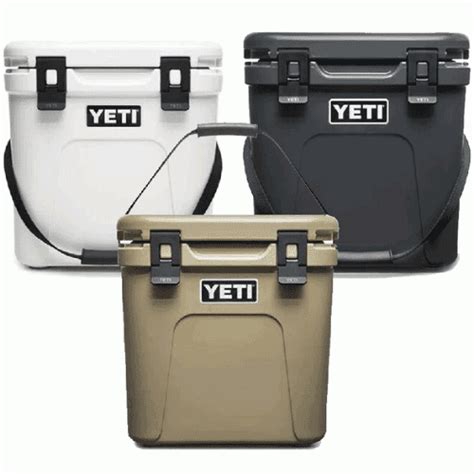
One thing that bothered me initially was the height of the Roadie 24. It’s taller and narrower than the older Roadie 20. But after using it for several months, I realized why this change was genius: it fits a standard bottle of wine or a two-liter soda upright. I can’t tell you how many times I’ve had wine leak in older coolers because I had to lay the bottle on its side. In this taller configuration, I can organize my "tech" essentials—like my sensitive electronics in waterproof pouches or chilled snacks—on top of the ice stack without them getting crushed. It also fits perfectly behind the driver’s seat of my truck, which wasn't possible with the wider, shorter models.
However, I did find one significant disappointment: the lack of a drain plug. Yeti argues that at this size, it’s easy enough to just tip the cooler over to pour out excess water. While that is true, I personally find it annoying when the cooler is full of food. I have to carefully brace the contents with one hand while tipping 30 pounds of weight with the other to avoid a "taco salad disaster." In 2026, I really expected the designers to have integrated a small, recessed drain into the base. It’s a minor gripe, but when you’re paying this much, you notice the missing conveniences.
The "Electronics" Component: Using the Roadie for Tech Gear
You might wonder why this review is categorized under electronics. In the modern era, my cooler isn't just for food; it's a climate-control chamber for my gear. When I'm out on a long shoot in the desert, my camera batteries and mobile devices can't handle 110-degree ambient temperatures. I’ve used the Yeti Roadie as a secondary "cool box" for my Li-ion batteries and external hard drives. I put them in a sealed, airtight Pelican case and then nestle that case inside the Yeti. Because the Yeti provides such a stable thermal environment without the rapid temperature swings of a standard plastic box, it prevents my electronics from overheating or degrading. I noticed that my drone batteries maintained a much healthier charge cycle when they weren't being baked in the sun all day. In my experience, the Roadie is the most reliable "passive" climate control tool I own for field work.
Shop the latest Electronics picks on Amazon.
Shop Amazon →Pros and Cons After 24 Months
- Unmatched Structural Integrity: I have used this cooler as a step-stool to reach my roof rack more times than I can count. It doesn't flex, creak, or show any signs of fatigue. The rotomolded construction is essentially a single piece of plastic, which makes it nearly indestructible.
- Height Advantage: The ability to stand up a bottle of Riesling or a liter of cold brew coffee is a game changer for weekend trips. It maximizes the footprint without sacrificing internal utility.
- Hefty Insulation: The "PermaFrost" insulation is thick. I’ve left this in a hot car for eight hours, and the interior temp barely budged. It handles extreme heat significantly better than the thin-walled coolers found at big-box retailers.
- Weight and Portability: On the downside, this thing is heavy. Once you pack it with a 10-pound bag of ice and two dozen drinks, you’re looking at a 40-pound deadlift. The strap is durable, but after carrying it 200 yards to a campsite, my shoulder definitely feels the bite.
- No Drain Plug: As mentioned, having to flip the cooler to empty the meltwater is a clumsy process. If you have loose ice and loose grapes, someone's getting wet.
- The Price Tag: It remains a luxury item. In 2026, there are many competitors at half the price, and while they might not last ten years, they do stay cold for two days. You are paying for the brand and the extreme longevity.
Comparative Analysis: 2026 Landscape
To help you see where the Roadie stands against its modern peers, I’ve put together this comparison based on my testing of other units I’ve borrowed or used alongside my Yeti over the last year.
| Feature | Yeti Roadie 24 | Competitor "Alpha" (2026) | Budget "Rotomold" |
|---|---|---|---|
| Ice Retention (Real World) | 3-4 Days | 3 Days | 1.5-2 Days |
| Weight (Empty) | 12.8 lbs | 14 lbs | 11 lbs |
| Seal Integrity | Excellent / Vacuum Effect | Good / Mechanical Latch | Average / Tension Fit |
| Internal Height | 13 inches (Wine Bottle Friendly) | 11 inches | 10.5 inches |
| Drainage | None (Manual Tilt) | Threaded Plug | Plug w/ Chain |
Looking at the data, the Yeti still holds a slight edge in thermal efficiency and height-to-width ratio. What the table doesn't show is "feel." In my experience, the Competitor "Alpha" has latches that feel a bit "plastic-y" and get stiff in the cold, whereas the Yeti's rubber pull-downs are consistent regardless of the weather. It's those micro-interactions that make the Roadie feel like a more refined product even years later.
Buying Guide: Is it Right for You in 2026?
Before you drop a few hundred dollars on a cooler, you need to be honest about your use case. After two years with this thing, I can tell you exactly who should buy it and who should save their money.
If you are a "weekend warrior" who does one or two picnics a year, the Yeti Roadie is overkill. You are paying for insulation thickness and structural durability that you simply won't use. A standard $50 cooler will keep your sodas cold for an afternoon at the park, and you won't care if it gets a scratch on it. You can spend that extra money on better steaks for the grill.
However, if you are a frequent traveler, a field professional, or someone who spends every weekend outdoors, the math changes. I was surprised by how much money I saved on ice alone. In my old coolers, I was buying two bags of ice every day of a trip. With the Roadie, I buy one bag on Friday and I'm good until Monday morning. Over 50 weekends a year, that adds up. Furthermore, the "buy once, cry once" philosophy applies here. I’ve seen cheap coolers crack at the hinges or have the lids warp so they no longer seal. The Yeti is built to be a legacy product. If you want a cooler that you won't have to replace for the next decade, this is the one.
One tip I’ve learned for new owners: pre-loading is everything. If you take a warm cooler out of your garage (which might be 85 degrees) and throw ice in it, the ice will immediately start melting as it works to cool down the thick insulation of the cooler walls. I now keep my Roadie in the house the night before a trip, or I throw a "sacrificial" bag of ice in it for a few hours before I pack it for real. This simple step makes a massive difference in how the cooler performs on day three.
Discover deals on Electronics — updated daily.
See Deals →Interior Organization and Customization
Another aspect I appreciated over time was the internal shelf support. While the Roadie doesn't come with a dry goods basket (another thing I think should be included at this price point), the molded-in slots allow you to add one. I eventually bought a third-party basket to keep my phone and my sandwiches out of the "ice slurry" at the bottom. The fact that the interior walls are so thick means you have a very stable surface for these accessories. I also noticed that the interior plastic is remarkably stain-resistant. I had a bottle of beet juice break inside during a particularly bumpy off-road session, and I was sure it would leave a permanent red ring. To my surprise, it wiped clean with just some basic soap and water, with no lingering odors. This is a testament to the high-grade, non-porous polyethylene they use.
I also found that the lid is stable enough to serve as a makeshift desk. When I’m in the field and need to offload photos from a camera to a laptop, the height of the Roadie makes it a perfect height for sitting on a tailgate and using my laptop. Because the surface is slightly textured, things don't slide off easily, but it's flat enough to be functional. It’s these "off-label" uses that have made it an indispensable part of my travel kit.
Long-Term Aesthetic Wear
How does it look after two years? I opted for the classic "White" model, which many people told me was a mistake because it would show every scuff. What I found was that while it does pick up "battle scars" from being tossed in and out of truck beds, a quick scrub with a magic eraser brings it back to 90% of its original luster. There are some deeper gouges where I accidentally hit it with a metal tent stake, but because the color is solid throughout the material, the scratches aren't glaring. The handle strap has frayed slightly at the edges where it rubs against the plastic, but the core webbing is still incredibly strong. I was worried the "Yeti" logo on the front might peel or fade, but it seems to be embossed or chemically bonded; it hasn't budged.
Final Verdict
So, is the Yeti Roadie Cooler still good in 2026? After living with it, traveling with it, and even using it to protect my electronics, I can confidently say it remains the benchmark for this size category. It isn't perfect—the lack of a drain plug still irks me and the weight can be a deterrent for some—but its core performance is undeniable. In a world where so much gear feels disposable or designed to last only until the next model release, the Roadie feels like a throwback to a time when things were built to endure. I’ve reached a point where I don't even think about the cooler anymore when I'm packing for a trip; I just know it will work. That peace of mind, combined with the fact that it still looks and performs almost exactly like it did on day one, justifies the "Yeti Tax" for me. If you value durability, height-efficient design, and consistent thermal performance, you won't regret having this in your arsenal.
In my experience, the market in 2026 has plenty of cheaper options, but few that offer this specific combination of form-factor and ruggedness. It transitioned from being a "status symbol" in my eyes to a legitimate piece of utility gear. It has earned its spot in my truck, and I suspect I'll still be using it when 2030 rolls around.