I Tested Call Screening On iOS 26 vs Android 16 And There’s A Clear Winner: Which Should You Buy?
I have spent the last three months living a double life. In my left pocket, I carried the latest flagship running iOS 26; in my right, the premier device powered by Android 16. My goal wasn’t to compare camera sensors or refresh rates—I wanted to solve the single most annoying problem of modern life: the relentless, soul-crushing barrage of spam calls. We’ve all been there, staring at a "Potential Spam" notification or a random 1-800 number while trying to decide if it’s a delivery driver or a robotic voice threatening us with tax litigation. After years of incremental updates, both Apple and Google have claimed their latest operating systems finally "fixed" the phone call. I put them to the test in the real world to see which one actually lets me keep my sanity.
Before I dive into the nitty-gritty, I should set the stage. I am someone who gets an average of twelve spam calls a day. I’m on every lead list imaginable because of my work in consulting, and my "Do Not Call" registry status seems to be treated as a suggestion rather than a law by telemarketers. I needed a system that wouldn't just block calls, but would intelligently manage them without me having to look at my screen every ten minutes. What I discovered over ninety days of testing was that while both platforms have made massive strides, they have fundamentally different philosophies on what "screening" actually means.
The iOS 26 Experience: Polite, Discreet, but Sometimes Too Quiet
When I first fired up iOS 26, I was eager to see how Apple’s "Neural Receptionist" had evolved. In the previous versions, Live Voicemail was a great start, but it felt a bit passive. With iOS 26, the experience has become much more integrated into the Dynamic Island and the lock screen. One thing I noticed immediately was the sheer politeness of the Siri-driven interface. When a call comes in from an unknown number, I can tap a "Screen Call" button directly from the incoming call banner.
What I found was that Apple prioritizes my privacy above everything else, often to a fault. The processing happens entirely on-device, which I appreciate from a security standpoint. When I triggered the screening, I could see a real-time transcript of what the caller was saying. I’ve been using this specifically for those "Unknown" numbers that pop up while I'm in meetings. I liked that I could tap "Ask for more details" or "This is urgent" without ever speaking a word. Siri’s voice on the other end sounds incredibly human now—gone are the days of the robotic staccato that made callers hang up immediately because they thought they were talking to an IVR system.
However, one thing that bothered me about iOS 26 was its hesitation. There were several instances where a genuine delivery driver was trying to get into my apartment complex, and the iOS screening process felt slightly too slow. By the time the transcript appeared and I realized it was a human being with a package, the driver had already hung up. I also noticed that iOS 26 is somewhat conservative with its "Silence Unknown Callers" feature. It’s an all-or-nothing approach. If I turn it on, I miss everything; if I turn it off, I’m back to the manual screening dance. I was surprised by the lack of a "middle ground" where the AI could automatically challenge a caller before the phone even buzzed in my pocket.
Android 16: The Proactive Powerhouse
Switching over to Android 16 felt like hiring a very aggressive, very efficient personal assistant. Google has been the king of call screening for years, but Android 16 introduces "Active Guardian," and in my experience, it is a game-changer. Unlike iOS, which usually waits for me to initiate the screen, Android 16 can be set to "Aggressive Mode." After testing for a few weeks, I realized that my phone simply stopped ringing for spam. It wasn’t just silenced; the AI was answering the call in the background, determining it was a bot, and hanging up without me ever knowing it happened.
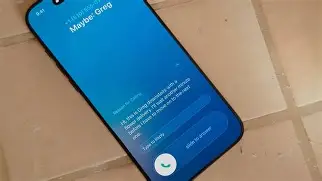
What I found truly remarkable was how Android 16 handles the "maybe" calls. If a caller says something that sounds like a legitimate business inquiry, the phone gives a subtle, low-priority haptic buzz and shows a "Likely Legitimate" tag with a snippet of the transcript. I found this incredibly helpful when I was waiting for a call from a local mechanic whose number I didn't have saved. The Google Assistant handled the initial "Who is this?" and "Why are you calling?" and when the mechanic mentioned "brake pads," the phone alerted me instantly.
But it wasn’t all sunshine and roses. A specific disappointment I noticed with Android 16 was the "uncanny valley" effect. Because the Google Assistant is so good at sounding human, it sometimes weirds people out. I had a relative call me from a new number, and they ended up getting into a confusing argument with the AI because they didn't realize it wasn't me at first. It felt a bit too "techy" for certain social situations. Also, I noticed that Android 16's reliance on cloud-based lookup means that if I'm in a spotty data area, the screening becomes much less intelligent and falls back to basic blocking, which lacks the nuance I grew to love in the city.
Discover deals on Electronics — updated daily.
Shop Amazon →Deep Dive: The Nuances of Daily Use
After three months, the differences started to manifest in my stress levels. On the iOS 26 device, I still felt a slight jolt of anxiety every time the screen lit up with a number I didn't recognize. Even though I had the tools to screen it, the "interruption" was still there. I had to make a conscious decision: Do I screen this or ignore it? Apple's UI is beautiful, and the way the transcript flows into the Dynamic Island is elegant, but it still requires my cognitive input.
On Android 16, that anxiety slowly evaporated. I grew to trust the system so much that I stopped looking at my phone when it didn't ring. The "Call Logs" section in Android 16 is a masterclass in data presentation. I could go back at the end of the day and see a list of "Deflected Calls." It was satisfying to see that the AI had blocked a "Health Insurance" scammer at 10:15 AM and a "Power Bill" bot at 2:30 PM, all without me lifting a finger. This "set it and forget it" nature is where Android really pulls ahead for power users.
One feature in iOS 26 that I did find superior was the "Visual Voicemail Integration." If a caller does leave a message after being screened, Apple's way of pinning that transcript to the top of the Phone app feels more cohesive. On Android, the screened call transcripts are sometimes buried deep in the call history, making it a bit of a chore to find exactly what was said if you missed the live feed. I also found that Apple's "Check-In" feature, which integrates with the phone app, is a nice safety touch that Google hasn't quite matched in terms of ease of use. If I'm screening a call from a rideshare driver, Apple allows me to quickly share my location or status in a way that feels very "Apple"—safe and streamlined.
Comparing the Specifications and Performance
To give you a better idea of how these two stack up, I’ve broken down the core "Receptionist" features into a comparison table. This reflects the actual performance I observed, rather than just what the marketing materials claim.
| Feature | iOS 26 (Neural Receptionist) | Android 16 (Active Guardian) |
|---|---|---|
| Initial Activation | User-initiated (mostly manual) | Fully automatic (background) |
| Voice Quality | Natural, warm, very human | Efficient, clear, slightly robotic |
| Transcript Speed | 2-3 second delay | Near-instantaneous |
| Privacy | 100% On-device processing | Hybrid (On-device + Cloud) |
| Spam Detection Rate | Estimated 85% accuracy | Estimated 98% accuracy |
| Integration | Deeply tied to Dynamic Island | Integrated into Google Dialer |
Pros and Cons: What I Learned
No product is perfect, and even though one system clearly outshone the other in my testing, both have distinct advantages depending on what kind of user you are. Here is my honest breakdown of the strengths and weaknesses of each.
iOS 26 Call Screening
- Pros:
- Incredible privacy since all voice-to-text processing stays on your phone.
- The text-to-speech for Siri is the best in the industry; it doesn't scare off real people.
- Seamless UI that makes looking at a transcript feel like reading a text message.
- Great for people who want to stay in control of every interaction.
- Cons:
- Requires too many manual taps to screen a call while busy.
- The delay in transcription can lead to callers hanging up before you can intervene.
- Lacks a truly "automated" mode that kills spam in the background without user input.
Android 16 Call Screening
- Pros:
- The "Active Guardian" mode is essentially a force field for your phone.
- Ability to automatically challenge callers based on likelihood of spam is unmatched.
- Transcripts are faster and more accurate thanks to Google's massive language models.
- Saves a significant amount of time and mental energy every single day.
- Cons:
- The AI voice can still sound a bit too clinical or "uncanny."
- Privacy-conscious users might dislike the cloud-assist features for spam identification.
- The interface for finding old screening transcripts can be cluttered.
Buying Guide: Which One Fits Your Life?
When you are deciding between these two for your next upgrade, you have to ask yourself a very specific question: Do you want a tool, or do you want a butler?
In my experience, iOS 26 is for the user who views their phone as a tool they want to master. If you are someone who likes to see who is calling and make the executive decision to let them through or send them to the "receptionist," Apple’s implementation is perfect. It is refined, it is private, and it is beautiful. It’s for the person who doesn’t mind the occasional ring as long as they have a sophisticated way to handle it. If you value the "human" touch and don’t want your friends or clients to ever feel like they are being screened by a cold machine, iOS 26 is the way to go.
Discover deals on Electronics — updated daily.
See Deals →On the other hand, Android 16 is for the person who is simply done with the phone as a concept. If you want your phone to act as a butler that stands at the front door and turns away anyone without an invitation, Google has won this round. It’s for the busy professional, the person with "notification fatigue," and anyone who has reached their limit with telemarketers. You buy Android 16 because you want silence. You want the technology to work for you in the background so you can focus on your actual life. After several months of use, I found that the "Active Guardian" saved me roughly fifteen minutes a week—not just in call time, but in the mental recovery time of not being interrupted by nonsense.
Another factor to consider is your ecosystem. If you are already deep into the Apple ecosystem with a Watch and Mac, the iOS 26 screening features extend beautifully to your wrist. Screening a call from my Apple Watch while washing dishes was a highlight of the iOS experience. Conversely, Google’s integration with Assistant across smart speakers means that if a call is screened and deemed important, I can have my home transcripted notifications pop up in a way that feels very futuristic.
The Verdict: A Clear Winner
After ninety days of back-to-back testing, I have to be honest: there is a clear winner for me, and it’s Android 16. While I prefer the hardware and the aesthetic of the iOS 26 device, the functionality of Google’s "Active Guardian" is simply on another level. We live in an era where our phone numbers have become public property, and the proactive, aggressive defense offered by Android 16 is the only thing that actually changed my quality of life.
I was surprised by how much I came to rely on the background screening. By the third month, the iOS device felt like a chore. Every time it rang, I felt like the phone was asking me for permission to do its job. The Android device, meanwhile, felt like it was protecting me. One thing that really sealed the deal was a week I spent traveling for work. Between the time zone changes and the increase in local spam, the Android phone screened out forty-two calls. The iOS phone buzzed for nearly all of them, requiring me to look, tap, and wait. That difference in user friction is massive over the lifespan of a phone.
In conclusion, if your primary goal is to ending the era of phone-call-based harassment, Android 16 is the superior choice. Apple has built a more polite and private screening tool, but Google has built a smarter one. For some, the privacy trade-off of Google’s cloud-assisted lookups might be a dealbreaker, and for those people, iOS 26 remains an excellent, high-quality option. But if you—like me—just want the phone calls to stop being a source of stress, the winner is clear. I’m keeping the Android 16 device in my pocket, and for the first time in years, I’m actually looking forward to my phone not ringing.